
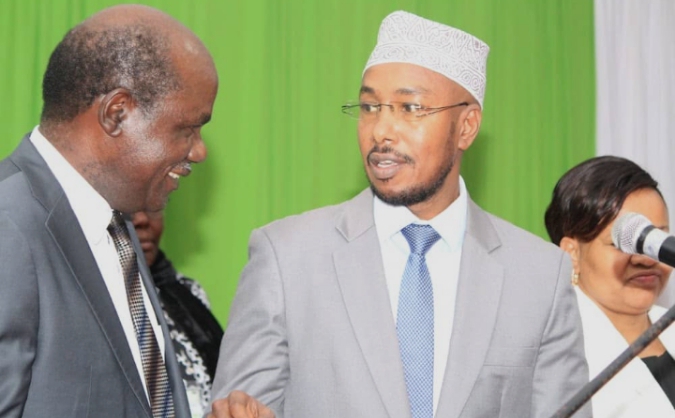

The Independent Electoral and Boundaries Commission (IEBC) has announced the departure of its Chief Executive Officer, Marjan Hussein Marjan, marking the end of a significant chapter in the management of Kenya’s electoral body.
In a statement issued on his exit, Marjan reflected on his time at the Commission, expressing appreciation for the opportunity to serve and for the support he received throughout his tenure. He described his period at the IEBC as both challenging and fulfilling, noting that the experience allowed him to contribute to the strengthening of electoral administration and institutional systems.
Marjan acknowledged the dedication of IEBC staff and commissioners, crediting teamwork and professionalism for enabling the Commission to carry out its constitutional mandate under often demanding circumstances. He also extended gratitude to stakeholders, including government agencies, political actors, development partners, and members of the public, for their engagement with the Commission during his leadership.
During his time as CEO, Marjan oversaw critical administrative functions at the IEBC, including coordination of electoral operations, institutional reforms, and capacity-building initiatives. His tenure coincided with a period of heightened public scrutiny of electoral processes, underscoring the importance of transparency, accountability, and efficiency within the Commission.
While the IEBC has not immediately announced details regarding his successor, the Commission indicated that established procedures will guide the transition to ensure continuity of operations. Internal mechanisms are expected to maintain stability as the institution prepares for future electoral and boundary-related responsibilities.
Marjan concluded his message by wishing the Commission well in its ongoing work, expressing confidence in its ability to uphold democratic principles and serve the Kenyan people. His departure comes at a time when the IEBC remains central to the country’s democratic framework, with expectations high for reforms and preparedness ahead of upcoming electoral cycles.
The exit of the CEO adds to a period of transition for the Commission, as stakeholders closely watch how leadership changes will shape its direction going forward.