
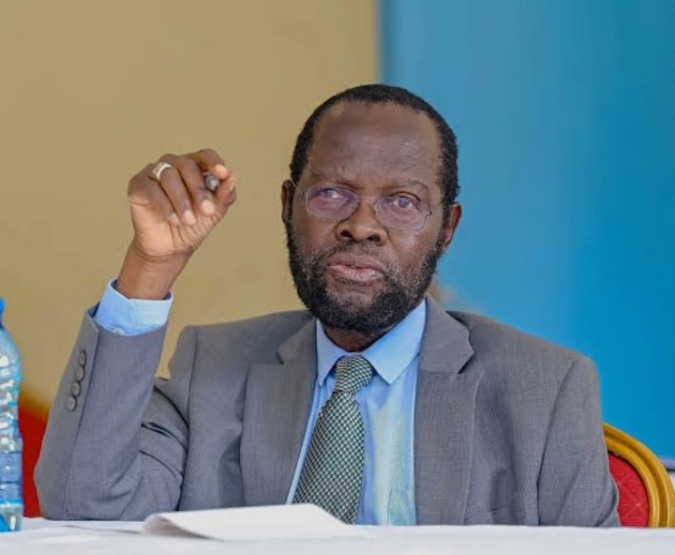

Anyang’ Nyong’o has called on the Orange Democratic Movement to return to its founding principles, warning that the party risks losing its ideological direction if it abandons the ideals that inspired its formation.
In a lengthy statement reflecting on the party’s journey, the Kisumu Governor and pioneer Secretary General said the ongoing wrangles within ODM should prompt deep reflection rather than division.
Nyong’o, who described himself as one of the architects present at the birth of the movement, said ODM was not created for political convenience but emerged from a historic struggle for constitutional reform and democratic accountability.
He paid tribute to the late party leader Raila Amollo Odinga, describing him as a nationalist who believed Kenya should be united by justice rather than ethnic calculations.
“ODM was born out of historical necessity,” Nyong’o said, recalling the political climate that led to the party’s emergence during the 2005 Kenyan constitutional referendum.
According to Nyong’o, the Orange symbol represented a rejection of a system that preserved excessive presidential authority while promising reforms.
He said Kenya’s political system had long been defined by an over-centralised presidency that controlled resources and appointments, fuelling ethnic competition for power.
Nyong’o noted that the adoption of the Constitution of Kenya 2010 helped disperse power through stronger institutions and the introduction of devolution, which he described as “democratic engineering” aimed at preventing any single individual or ethnic coalition from monopolising the state.
However, he warned that constitutional reform alone cannot guarantee democracy unless political actors remain committed to defending those gains.
Reflecting on ODM’s 20-year journey, Nyong’o said the party must ask difficult questions about whether it has fulfilled its founding mission of promoting constitutionalism, social justice, and national unity.
While acknowledging progress such as the strengthening of civil liberties and the entrenchment of devolution, he said challenges including corruption, economic inequality, and youth unemployment remain unresolved.
Nyong’o also addressed generational debates within ODM, saying internal competition should not be viewed as a threat but as a sign of vitality.
“Young leaders questioning old assumptions is renewal, not rebellion,” he said, adding that experienced leaders must mentor the next generation to sustain the movement.
He urged the party to resist reducing politics to ethnic arithmetic or short-term alliances that compromise its ideals.
Nyong’o concluded by urging ODM members to safeguard the Constitution, defend devolution, and remain committed to democratic reforms.
“Twenty years ago, an orange became a symbol of defiance. Today, it must remain a symbol of conscience,” he said.