

A new breakdown from the Central Bank of Kenya (CBK) shows a slow and uneven transition among lenders to the country’s updated loan pricing framework. Despite months of preparation and regulatory guidance, nearly half of Kenyan banks have yet to switch to the revised risk-based model that is meant to guide interest rate decisions more transparently.
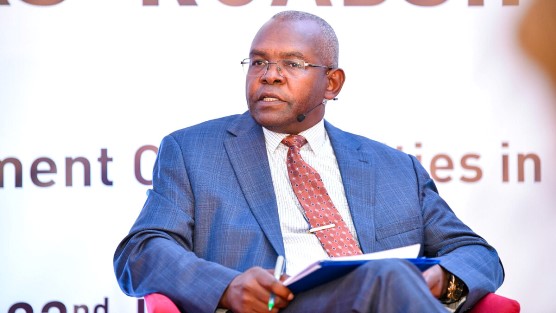
Speaking on Wednesday, December 10, CBK Governor Kamau Thuge revealed that 48 per cent of banks are still pegging their loan rates to the long-standing Central Bank Rate (CBR). Only 18 per cent have fully adopted the Kenya Shilling Overnight Interbank Average (KESONIA) – the benchmark underpinning the new model – while 34 per cent are using a hybrid of both CBR and KESONIA.
This update comes three months after the regulator formally transitioned to a risk-based loan pricing framework aimed at promoting clarity and accountability in lending. Despite the slow uptake, the Governor confirmed that all 37 licensed banks have already submitted their individual risk-based pricing formulas to the CBK.
He added that the regulator expects banks to maintain transparency as they implement the model. Some lenders will continue referencing the CBR, others will rely entirely on KESONIA, and several will use a blend of the two benchmarks depending on their internal strategies.
The shift to KESONIA was first announced in September after a stakeholder engagement process that began in April. CBK said the consultations captured input from banks, industry associations, non-bank financial institutions, development partners, corporate sector players, academic experts and individual contributors.
Under the new structure, a bank’s lending rate will be computed as KESONIA plus a premium “K,” which reflects operational costs, expected shareholder returns and the borrower’s unique risk profile.