
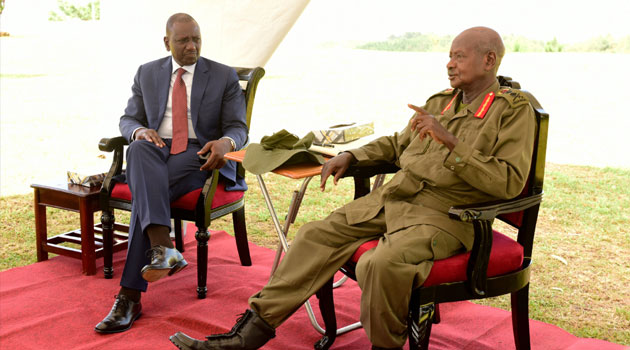

President William Ruto has addressed rising speculation over Kenya’s relationship with Uganda following reports suggesting Kampala was preparing for conflict over access to the Indian Ocean.
Speaking during the groundbreaking ceremony of the Devki Steel Factory in Osukuru, Tororo District, Uganda, Ruto dismissed claims of an impending dispute, accusing sections of the media of sensationalising Uganda’s stance.
“I know some people in the media have tried to create the impression that Uganda said it must access the sea by any means,” Ruto stated. “Let me assure everyone that Uganda and Kenya are brothers and sisters.”
Earlier in November, social media and various outlets had circulated claims that President Yoweri Museveni intended to wage war against coastal East African countries to secure direct access to the Indian Ocean. These reports further alleged that Uganda planned to establish a navy-an ambition hampered by the country’s landlocked position.
Strong Trade and Social Relationship
Addressing the concerns on Sunday, November 23, Ruto emphasised that relations between Nairobi and Kampala remain strong and would not be shaken by misinformation or exaggerated narratives about territorial disputes.
The President noted that Uganda already has guaranteed access to the Kenyan coastline as part of ongoing regional infrastructure projects.
“Uganda is fully assured of access to the sea through Kenya. That is why we are extending the oil pipeline, improving the road network, and expanding the railway. Kenya and Uganda are brothers and sisters, and we have no time for negative engagement,” he added.
In response to earlier comments attributed to Museveni about penetrating Kenyan and Tanzanian coastlines, the Ugandan leader later clarified that his remarks were tied to his push for a deeper East African Community (EAC) political federation.
Museveni explained that such a federation would enhance integration beyond the current customs union, enabling shared political, economic, and military decision-making across EAC member states.