

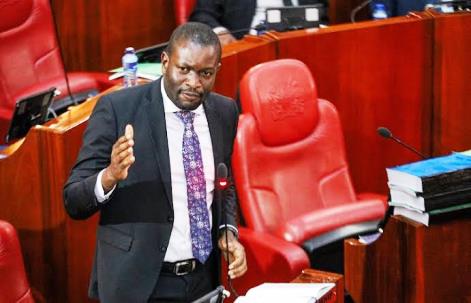

The backlash against COTU Secretary General Francis Atwoli’s remarks about “Linda Mwananchi” has quickly transformed into a powerful fundraising campaign that is demonstrating the influence of small individual contributions in Kenyan politics.
Atwoli sparked widespread criticism after dismissing the Linda Mwananchi initiative and describing its supporters as “poor people,” while also taking a swipe at Nairobi Senator Edwin Sifuna, who has been championing the movement. His remarks were interpreted by many Kenyans as an insult not only to the initiative’s supporters but also to millions of ordinary citizens struggling with the high cost of living, including mama mboga, boda boda riders, casual workers, artisans, and other low-income earners.

Rather than weakening the movement, the comments appear to have energized it.
Within hours of appeals by supporters, Kenyans had reportedly contributed more than KSh 600,000 to Edwin Sifuna’s Paybill to support Linda Mwananchi activities. What stands out is not only the amount raised but also how it was collected. Many contributors sent as little as KSh 10, KSh 20, or KSh 30, proving that thousands of small donations can quickly add up to a significant campaign fund.
The fundraising drive has revived discussions about the growing role of grassroots financing in politics. Unlike traditional campaigns that rely heavily on wealthy donors or corporate sponsors, a movement sustained by ordinary citizens can potentially enjoy greater independence and stronger public ownership. When thousands of people contribute even the smallest amounts, they develop a personal stake in the success of the campaign.
If this pattern continues, Linda Mwananchi could evolve into one of the country’s most financially sustainable grassroots political movements. Small contributions place little strain on individual supporters, making them easier to sustain over long campaign periods. While a single large donor may withdraw support at any time, thousands of ordinary Kenyans contributing modest amounts can create a more resilient funding base.
The development also highlights an important lesson in politics: underestimating ordinary citizens can have unintended consequences. Instead of discouraging supporters, Atwoli’s remarks appear to have inspired many Kenyans to contribute financially as a way of expressing their dissatisfaction and solidarity with the movement.
The fundraising momentum has also fueled debate about Edwin Sifuna’s political future. Although Kenya’s presidential elections require nationwide support, broad coalitions, party structures, and constitutional requirements, the response to the Linda Mwananchi appeal suggests that grassroots enthusiasm can become a powerful political force. A candidate backed by millions of ordinary citizens making consistent small contributions could build a formidable campaign capable of competing with rivals financed by a handful of wealthy individuals.
Whether the current fundraising wave develops into a lasting political movement remains to be seen. However, one thing is already evident: the collective power of ordinary Kenyans should never be underestimated. When citizens unite behind a common cause, even the smallest contributions can create significant political momentum and reshape the national conversation.