
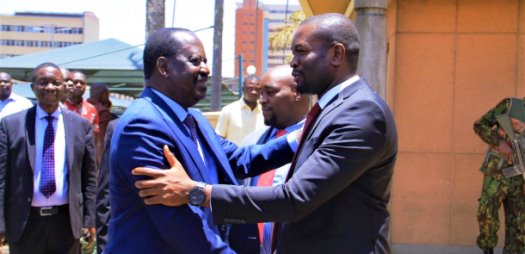

With the next General Election drawing closer, Kenya’s political landscape is already taking shape. Campaigns have effectively begun, with politicians returning to the grassroots to reconnect with voters and consolidate their support.
For decades, ODM enjoyed significant backing from the Luhya community, largely due to the inclusive leadership style of Raila Odinga. Many supporters believe he understood the importance of building and maintaining relationships across Kenya’s diverse communities. His approach ensured that leaders from different regions and ethnic backgrounds felt represented both within the party and in key leadership positions.
The current ODM leadership, however, has faced criticism from some quarters over how it has handled internal disagreements. The decision to confront or sideline party officials perceived to be opposed to the broad-based political arrangement has raised questions about the party’s commitment to accommodating differing opinions. Critics argue that removing leaders such as Edwin Sifuna and Godfrey Osotsi from influential positions weakened rather than strengthened the party.
Reports of differences between the current leadership and senior party figures such as Millie Odhiambo and Otiende Amollo have further fueled the perception of internal divisions. Public statements by some leaders defending or criticizing recent decisions have only intensified the debate over the party’s direction.
At the same time, remarks by Peter Kaluma suggesting that the Luhya community is being politically aligned with the Kikuyu community have sparked discussion. However, one may ask: is there anything inherently wrong with political cooperation between these communities? Kenya’s politics has often been shaped by coalitions that cut across ethnic lines, and there is nothing unusual about communities working together in pursuit of shared political goals.
As the opposition continues to reorganize, leaders such as Kalonzo Musyoka and Edwin Sifuna are expected to play increasingly significant roles in shaping future political alliances. Whether these partnerships will translate into electoral success remains to be seen, but they are likely to influence the country’s political conversation ahead of the election.
Ultimately, ODM faces a critical test. If it fails to preserve the broad coalition and inclusive politics that many supporters associate with its strongest years, it risks losing both influence and the numerical advantage that once made it one of Kenya’s most formidable political parties. The coming months will determine whether the party can rebuild internal unity or whether its current challenges will continue to erode its support base.
It goes without saying that, it is too late to witness the once vibrant largest party built by the late Raila Odinga for years now fumble with direction just months to general elections.