

MPs Push for Faster, Digital Renewal of Certificates of Good Conduct
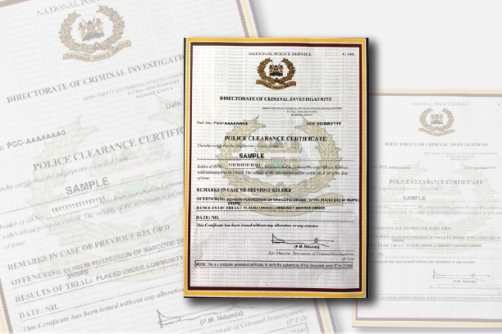
Kenyans may soon be spared the long queues and repetitive procedures that have long defined the application process for Certificates of Good Conduct, as Parliament considers reforms aimed at digitising and simplifying the service.

Members of Parliament on Thursday, April 23, met to deliberate on the National Police Service Amendment Bill, which proposes eliminating the need for applicants to resubmit fingerprints during certificate renewals.
The Bill, sponsored by Kandunyi MP John Makali, aims to modernise the issuance of Certificates of Good Conduct by easing congestion at application centres and enhancing efficiency.
Appearing before the lawmakers, Makali said the proposal is anchored on leveraging existing biometric data to allow seamless online renewals without requiring applicants to present themselves physically.

“The primary objective is to ensure that once an applicant’s biometrics are captured, subsequent applications can be processed online without the need for physical appearance,” he stated.
He further revealed that the Directorate of Criminal Investigations currently handles nearly one million certificate applications annually, a volume that has strained infrastructure and contributed to persistent delays.
If passed, the law will compel the DCI to establish and maintain a secure biometric database, enabling previously collected fingerprints and related data to be reused for future applications.

Lawmakers were informed that the move would significantly cut waiting times and ease pressure on service points such as Huduma Centres and DCI offices nationwide.
Committee Vice Chair Robert Pukose welcomed the proposal but sought clarity on whether the changes could disrupt ongoing services.
In response, Makali assured the committee that certificate issuance would continue uninterrupted, with the only difference being a faster and more efficient process once the Bill is enacted.
During the session, legislators also reviewed the financial implications of the reforms. Officials disclosed that the government is in the process of upgrading the Automated Palm and Fingerprint Identification System (APFIS) to a more advanced Multi-Biometric Identification System (MBIS).
The upgrade is projected to cost approximately Ksh2.71 billion over five years. So far, Ksh1.138 billion has been allocated, leaving a funding shortfall of about Ksh1.57 billion.
The new system is expected to be completed by the 2028/29 financial year, paving the way for a fully digital, faster, and more reliable certificate processing framework.

Email: serviceske01@gmail.com | WhatsApp: +254 731 376 956