

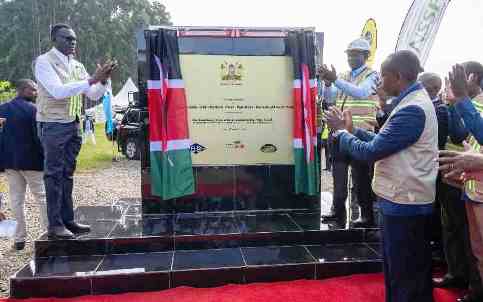

The government, through the Directorate of Public Private Partnerships (PPP), has finally responded to public concerns over the pace of construction on the multibillion-shilling, 175-kilometre Rironi–Mau Summit expressway.
The clarification comes amid growing public debate on social media questioning whether the project is progressing as expected since its launch and why visible road surfacing works appear limited months after commencement.

Director General of the PPP Directorate, Engineer Kefa Seda, on Tuesday addressed concerns raised about the pace and design of the ongoing works. He defended the construction sequencing, stating that the project is being implemented in line with strict engineering standards and contractual obligations under the PPP framework.
The concerns were triggered by a social media user who asked: “The Rironi–Mau Summit road was launched on November 28, 2025. We’re now in the sixth month since then, so can anyone close to the project give us an update on the progress? Has any part been tarmacked, and are there any bridges under construction?”
The user further questioned the lack of visible asphalt works, noting that while earthworks appear to be ongoing, there is little evidence of major structural milestones such as completed bridge sections or paved road surfaces.
In his response, Seda explained that the current phase of construction is intentionally focused on foundational and structural works before any asphalt is laid, which is standard practice in large-scale highway development projects.
He noted that the project is currently prioritising subgrade formation, soil stabilisation, drainage installation, and key structural components such as culverts and bridges to ensure long-term durability and safety.
“The Rironi–Nakuru–Mau Summit project is being executed in strict accordance with the approved engineering design, specifications, and the construction sequencing embedded within the PPP contract,” Seda stated.
He added that “bituminous surfacing is the final stage in a structured pavement development process, which is preceded by critical structural works designed to ensure durability, safety, and optimal lifecycle performance.”
According to Seda, ongoing works along the corridor include subgrade preparation to meet required California Bearing Ratio standards, as well as the installation of comprehensive drainage systems to manage both surface and subsurface water.
He further noted that parallel activities include the construction of culverts and bridges, which are essential for hydraulic flow and road continuity, alongside the placement, layering, and compaction of engineered fill to achieve the required density and load-bearing capacity.