
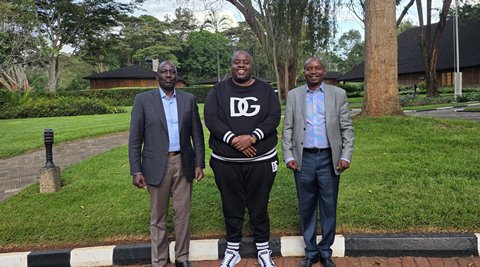
Wicknell Chivayo’s Death Puts His Kenya Connections Under Fresh Scrutiny
The death of Zimbabwean businessman Wicknell Chivayo in a helicopter crash has brought renewed attention to the businessman’s increasingly visible connections to Kenya’s political and business circles.

Chivayo, 43, was among those reportedly killed when a helicopter crashed in Zimbabwe’s Marondera area on Wednesday, September 30, 2026. His wife, Lucy Muteke, was also among those who died in the crash.
His death comes at a time when his name had become increasingly familiar in Kenya, particularly because of his publicly documented interactions with President William Ruto and his reported interest in major Kenyan business opportunities.
President Ruto mourns his “dear friend”

President William Ruto has expressed deep sadness following Chivayo’s death, describing the Zimbabwean businessman as “my friend” and “a dear friend.”
In his condolence message, President Ruto said:
“I am deeply saddened by the tragic passing of my friend, Wicknell Chivayo, together with his wife, Lucy Muteke, and the other lives lost in the helicopter crash in Zimbabwe. Their sudden departure is a painful loss to their families, friends and all who knew them.

“Wicknell was a dear friend whose warmth touched many people. I will remember him for his friendship, his energy and his deep conviction in the possibilities of our continent.
“I convey my deepest condolences to the families of all those who lost their lives, to President Mnangagwa, the people of Zimbabwe and everyone mourning this tragic loss. May God grant Wicknell, Lucy and all those who perished eternal rest.”
The President’s description of Chivayo as a personal friend is likely to add further interest to the questions surrounding the Zimbabwean businessman’s Kenyan connections, particularly given the public meetings and photographs documenting their interactions.
The condolence message, however, does not itself establish any connection between the President’s relationship with Chivayo and a particular government contract.
His growing visibility in Kenya
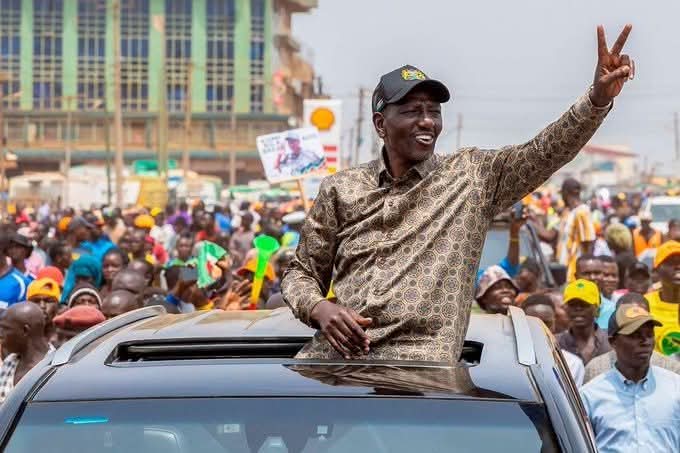
Chivayo had been photographed and filmed with President Ruto on several occasions. His encounters with the President included visits to State House and other meetings.
The frequency and visibility of those encounters made Chivayo an increasingly recognisable figure around Kenya’s political leadership.
The meetings, however, do not by themselves establish that any government contract was awarded because of political access. That distinction remains important as Chivayo’s Kenyan activities are revisited.
The Sh375 billion JKIA controversy
The biggest Kenyan controversy involving Chivayo emerged in June 2026, when reports linked his company, IMC Construction Kenya, to a consortium associated with the proposed expansion and modernisation of Jomo Kenyatta International Airport.
Some Kenyan publications reported that a Chivayo-linked company had secured a stake in a project described as worth about Sh375 billion.
But the government subsequently disputed that account.
Transport Cabinet Secretary Davis Chirchir said Chivayo’s company had not participated in the tender, either independently or as part of a consortium. He also said the procurement process had been conducted through open international competitive bidding.
Chirchir further disputed the Sh375 billion figure, saying the government did not expect the contract award to exceed Sh154.2 billion.
The conflicting accounts are therefore part of the story themselves: media reports linked Chivayo to the proposed project, while the responsible government ministry publicly denied that he or his company was involved.
What about Kenya’s 2027 ballot papers?
Another claim that circulated in Kenya alleged that Chivayo had been awarded the tender to supply ballot papers and other election materials for the 2027 General Election.
That claim should be treated cautiously.
The Independent Electoral and Boundaries Commission did commence procurement for major 2027 election requirements, including ballot papers and related election materials. However, the available evidence does not establish that Chivayo had been awarded Kenya’s ballot-paper tender.
There is a documented reason why Chivayo’s name became associated with election-material procurement in the first place.
In Zimbabwe, investigations examined the relationship between Chivayo and South African printing company Ren-Form in connection with election materials supplied to the Zimbabwe Electoral Commission. Those matters concern Zimbabwe and should not be presented as proof of wrongdoing in Kenya.
The questions now facing Kenya
Chivayo’s death does not establish that any Kenyan deal was improper. But his death is likely to bring renewed attention to his Kenyan business activities and political connections.
Among the questions that remain relevant are:
- What precisely was the nature of Chivayo’s business relationship with Kenyan entities?
- Which Kenyan companies, individuals or foreign partners did he work with?
- What meetings did he hold with senior Kenyan officials, and what was discussed?
- Did any Kenyan government procurement process formally involve companies associated with him?
- What documentation exists concerning the claims linking him to the JKIA project?
- Who ultimately participated in the relevant business arrangements?
- And was there ever any formal connection between Chivayo or his associates and Kenya’s 2027 election-material procurement?
These questions require documentary evidence – including tender documents, company records, procurement records and official correspondence – rather than conclusions based solely on photographs, political proximity or social-media claims.
A Kenyan chapter that now demands documentation
Chivayo’s public profile was built partly around his proximity to powerful political figures and his involvement in large government-linked projects in several African countries.
His death closes his personal chapter, but it does not automatically close questions surrounding transactions or relationships that may involve companies, government agencies and other individuals.
In Kenya, the most important task now is therefore to establish what was actually contracted, by whom, for how much, through which procurement process and with what documented ownership or partnership structures.
Those records – rather than Chivayo’s reputation or political photographs – will ultimately provide the clearest picture of his Kenyan business dealings.

Email: serviceske01@gmail.com | WhatsApp: +254 731 376 956